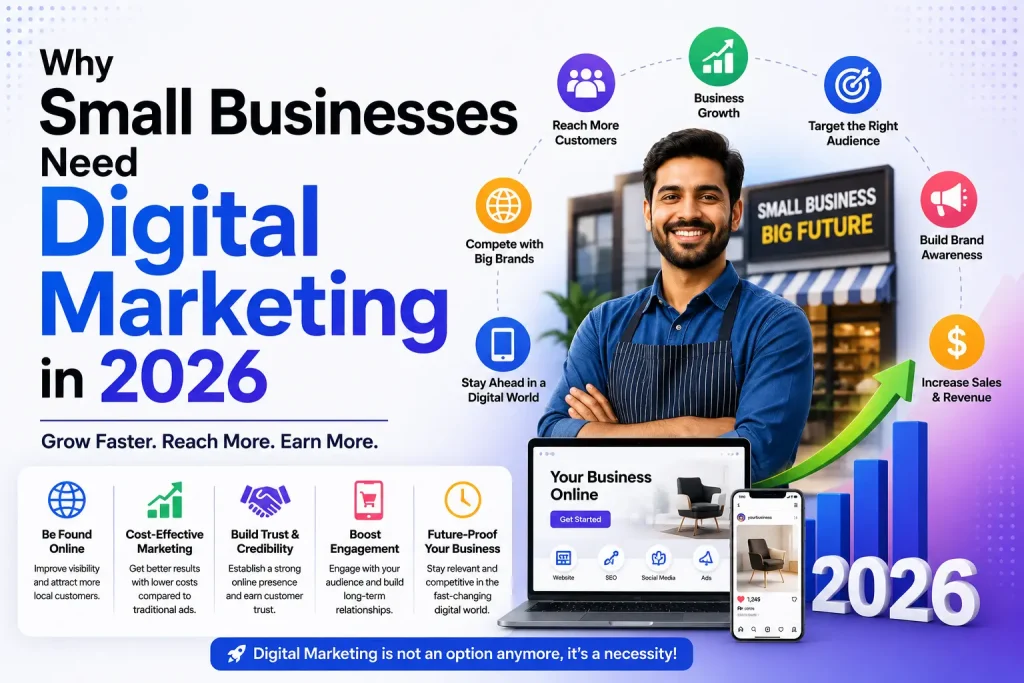
Why Small Businesses Need Digital Marketing in 2026




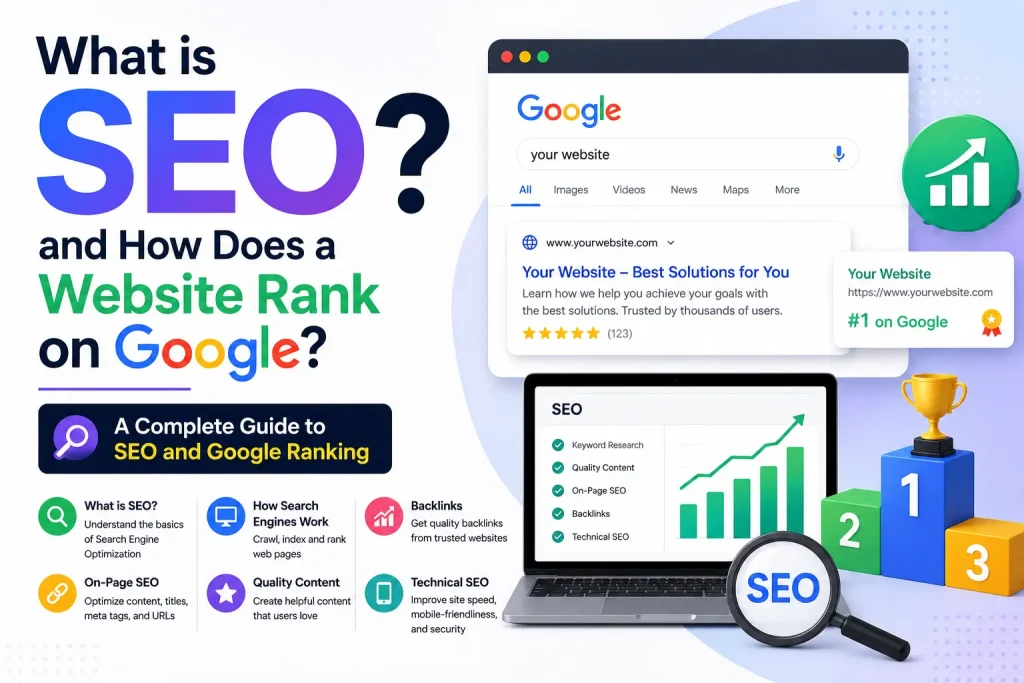
Today, almost every business, blogger, and company wants their website to appear on Google’s first page. Most people click on websites that appear at the top of Google search results.
If your website ranks on the first page of Google, you can get:
But the main question is: how does Google rank a website?
This is where SEO comes in.
SEO stands for Search Engine Optimization. It is a process used to improve a website so that it can appear higher in Google and other search engine results.
In this guide, you will learn what SEO is, how Google ranks websites, different types of SEO, and useful SEO tips for beginners.
SEO means improving a website so it can rank better on search engines like Google.
In simple words, when someone searches on Google and your website appears in the search results, it happens because of SEO.
The main purpose of SEO is to increase website visibility and bring more organic traffic.
Search engines like Google work in three main steps:
1. Crawling
Google bots scan website pages and collect information.
2. Indexing
Google saves useful pages in its database.
3. Ranking
Google shows the most relevant websites according to the user’s search query.
Google checks many factors before ranking a website.
On-page SEO includes optimization done inside the website.
It Includes:
Example:
If your target keyword is “Digital Marketing Course,” it should be used naturally in the title, headings, and content.
Off-page SEO includes activities done outside the website.
It Includes:
Example:
When other websites link to your website, Google considers your website more trustworthy.
Technical SEO improves the technical performance of a website.
It Includes:
Example:
If a website loads slowly, users may leave quickly, which can lower rankings.
Keywords are the words or phrases people type into Google.
Examples:
If your website targets the right keywords, it has a better chance of ranking higher.
Keyword research is one of the most important parts of SEO.
Benefits:
Useful Tools:
Google always prefers useful and high-quality content.
Features of Good Content:
Example:
A detailed article about SEO tips has a higher chance of ranking on Google.
Users do not like slow websites.
Benefits of a Fast Website:
Tips to Improve Speed:
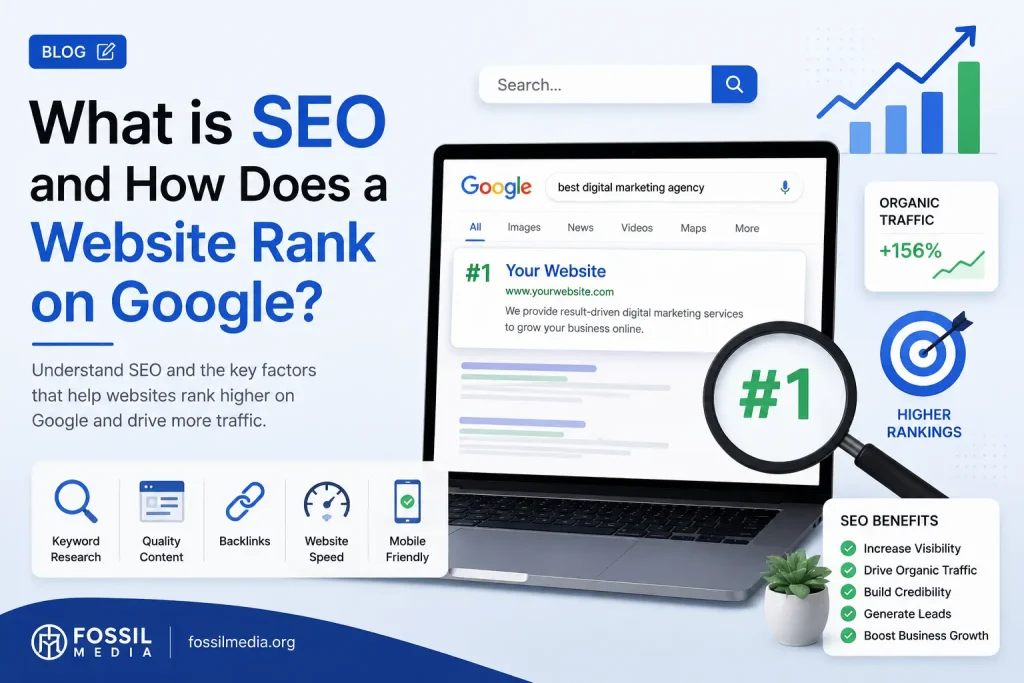
Today, most people use mobile phones to browse the internet.
If a website is not mobile-friendly, its ranking may decrease.
Features of a Mobile-Friendly Website:
Popular Platforms:
When another website links to your website, it is called a backlink.
Google treats backlinks as a trust signal.
Benefits of High-Quality Backlinks:
Internal linking means connecting one page of your website to another page.
Benefits:
These appear in Google search results.
Meta Title:
The main title of a webpage.
A short summary of the webpage.
Example:
Title: What is SEO and How to Rank a Website
Description: Beginner-friendly guide to SEO and Google ranking.
Images affect both website speed and SEO.
Tips:
Google prefers websites that provide a good experience to users.
Features of Good UX:
Benefit | Description |
Free Organic Traffic | Get visitors without paid ads |
Better Visibility | Rank higher on Google |
Brand Awareness | Increase business popularity |
More Leads | Get more customer inquiries |
Long-Term Results | Long-lasting benefits |
Better User Experience | Easy website navigation |
Long-tail keywords are easier to rank.
Examples:
Google prefers active websites with fresh content.
Use guest posting and collaborations to get backlinks.
A fast website helps improve rankings.
AI tools make content creation and SEO research easier.
Useful AI Tools:
Keyword Stuffing
Using too many keywords unnaturally.
Duplicate Content
Copy-paste content can hurt rankings.
Slow Website
Slow loading speed can reduce rankings.
Poor Mobile Experience
Mobile optimization is very important.
SEO is changing very quickly in 2026.
Future SEO Trends:
Step 1: Learn keyword research
Step 2: Understand on-page SEO
Step 3: Learn content writing
Step 4: Learn backlink building
Step 5: Use Google Analytics and Search Console
Useful Tools:
SEO is a powerful digital marketing strategy that helps websites rank on Google and get organic traffic.
A website has a better chance of ranking higher if it:
In 2026, SEO has become an important skill for bloggers, business owners, and digital marketers. If you want long-term online growth, learning and using SEO correctly is very important.